Sourcing parts for a Triumph comes with more decisions than owners of some other brands face, mainly because Triumph’s model lineup spans classic-styled Bonnevilles, modern Speed Triples, adventure-focused Tigers, and cruiser-style Rocket 3 models, each with a somewhat different parts ecosystem. This guide walks through where parts come from, how to know what fits, and what to watch out for before you buy.
OEM vs. Aftermarket: The Core Decision
Every parts search eventually comes down to this choice.
OEM (Original Equipment Manufacturer) parts are made by Triumph or its approved suppliers to match factory specifications exactly. They cost more but guarantee fit and often preserve warranty coverage on newer bikes still under manufacturer protection.
Aftermarket parts are made by third-party manufacturers. Quality varies enormously by brand and part category. For some components, like exhaust systems or handlebar risers, well-regarded aftermarket brands often match or exceed OEM performance, and in some cases offer features OEM parts don’t, like adjustable ride height or weight savings. For others, like electrical components or fuel system parts, sticking closer to OEM or highly reputable aftermarket brands reduces the risk of fitment or reliability problems that can be harder to diagnose than a cosmetic part gone wrong.
Common Categories Owners Shop For
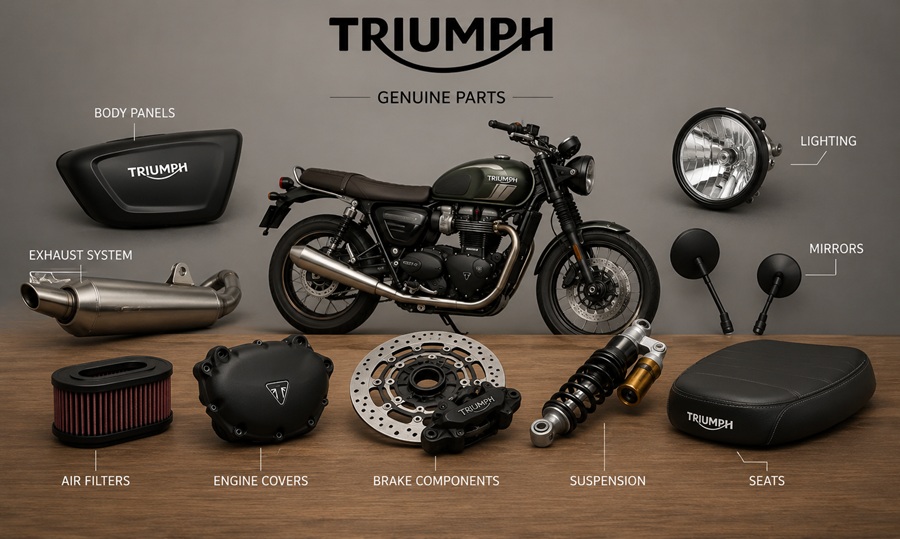
Maintenance and wear parts – Brake pads, chains, sprockets, air filters, and spark plugs make up the bulk of routine parts purchases. These are widely available from both OEM and aftermarket sources, and fitment is usually straightforward as long as you match the exact model year and, where applicable, the specific trim level.
Performance parts – Exhaust systems, air intake kits, and ECU tuning components are popular on Speed Triple and Street Triple models in particular. These parts can meaningfully affect sound, power delivery, and in some cases emissions compliance, so checking local regulations before installing a non-stock exhaust is worth the extra step, especially in states with strict emissions or noise testing.
Styling and ergonomic parts – Bonneville and Speedmaster owners frequently customize seats, handlebars, mirrors, and fenders to change the bike’s stance or riding position. Because these bikes share a strong customization culture, there’s an unusually large aftermarket catalog specific to Triumph’s modern classic lineup, ranging from small cosmetic swaps to full café racer or scrambler conversion kits.
Touring and adventure parts – Tiger owners commonly add luggage systems, crash bars, and upgraded windscreens for long-distance and off-road use. These parts are typically sold as fitted kits designed around the exact Tiger variant, since frame and bodywork differ between models like the Tiger 900 and Tiger 1200.
Suspension and handling parts – Upgraded shocks, fork springs, and steering dampers are common upgrades across the Speed Triple and Street Triple lines for owners who use their bike on track days or spirited road riding. These parts have a direct effect on handling and safety, so fitment accuracy and brand reputation matter more here than in purely cosmetic categories.
Confirming Fitment Before You Buy
The single most common mistake buyers make is assuming a part fits because it’s listed for “Triumph.” Model, generation, and engine displacement all affect compatibility, and Triumph has reused model names across different platforms over the years. Before purchasing, confirm:
- Your exact model name and generation, for example Street Twin versus Street Twin 900 versus Bonneville T100
- Your model year, since mid-cycle updates can change part numbers without changing the model name
- Your engine displacement, since some models share a name but not an engine
- Whether the seller lists confirmed compatibility for your specific VIN range, not just the general model name
- Whether the part is region-specific, since US-market Triumphs sometimes differ slightly from UK or EU-market versions of the same model
Where Owners Typically Source Parts
Authorized Triumph dealers carry OEM parts and can order anything not in stock, and are the most reliable source when fitment certainty matters most, such as for safety-related components like brake lines or suspension parts. Independent motorcycle parts retailers and specialty Triumph aftermarket brands offer broader selection and often lower prices for maintenance and styling parts. Owner forums and community groups, while not a parts source themselves, are frequently the best place to learn which aftermarket brands other Triumph owners have had good experiences with for your specific model, particularly for parts where fitment issues are common enough to be worth asking about first.
Buying Parts Online: What to Check
When ordering parts online rather than through a dealer counter, a few checks reduce the chance of a costly return. Confirm the seller’s return policy specifically covers incorrect fitment, not just defective parts. Look for listings that reference your bike by VIN range or detailed year span rather than a broad model name alone. Cross-check part numbers against your bike’s parts diagram if you have access to one, since a matching part number is the most reliable fitment confirmation available. And for anything safety-related, favor sellers with clear manufacturer information over unbranded or unlabeled listings, even if the price is lower.
When to Choose a Dealer Over Aftermarket
For anything related to braking, suspension, or electrical safety systems, sourcing OEM or dealer-recommended parts is generally the more cautious choice, particularly on newer Triumphs with integrated electronics like ride-by-wire throttle systems or electronic suspension. For cosmetic, ergonomic, or non-safety-critical performance parts, a reputable aftermarket option is often a reasonable way to reduce cost without meaningfully increasing risk.
Installation Considerations
Some parts, particularly wear items like brake pads or air filters, are straightforward for an owner comfortable with basic maintenance to install. Others, especially anything involving the fuel system, electronics, or suspension geometry, are worth having installed by a qualified technician, since incorrect installation can affect both safety and warranty coverage. If you’re uncertain whether a part falls into the do-it-yourself category, checking your bike’s service manual or asking a dealer directly before starting the job is a reasonable precaution.
Frequently Asked Questions
Are Triumph parts interchangeable across different models?
Sometimes, particularly within the same platform generation, but not reliably across different model lines. Always confirm compatibility by model, year, and engine displacement rather than assuming based on the name alone.
Do aftermarket exhausts affect a Triumph’s warranty?
Modifying certain systems can affect warranty coverage on related components, depending on the specific Triumph warranty terms and the modification made. Checking your bike’s warranty documentation before installing performance parts is worth doing first.
Where can I find my Triumph’s exact model and engine specs?
Your bike’s VIN, typically stamped on the steering head and listed on your registration, is the most reliable way to confirm exact specifications when ordering parts.
Is it cheaper to buy Triumph parts directly from a dealer or through a retailer?
Retailers and specialty aftermarket sellers are often cheaper for maintenance and styling parts, while dealers are typically more competitive, or necessary, for parts still under manufacturer backorder or warranty-related replacement.
Do older Triumph models have fewer aftermarket options than newer ones?
It varies by model line. Classic-styled models like the Bonneville tend to have strong aftermarket support across generations, while newer or less common models may have a more limited aftermarket catalog until more owners adopt them.
Can I install performance parts myself, or should I use a mechanic?
Simple bolt-on parts are often manageable for owners with basic tools and experience, but anything affecting fuel delivery, electronics, or suspension tuning is generally safer left to a qualified technician.