Ask ten riders what they pay for motorcycle insurance and you’ll likely get ten different answers, sometimes wildly different ones. That’s not because pricing is random. It’s because “average cost” hides a lot of variation depending on who’s riding, what they’re riding, and how much coverage they’ve chosen.
This breaks the average down by the categories that actually explain the difference, rather than presenting one flat number that doesn’t apply to your situation.
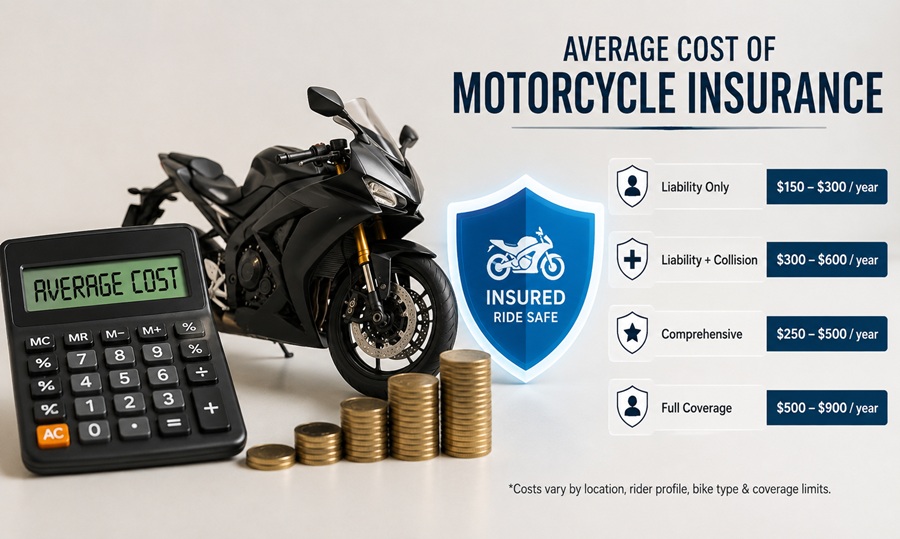
By Coverage Level
| Coverage Type | Typical Annual Range | What It Covers |
|---|---|---|
| State minimum liability | $75–$300 | Damage/injury you cause to others |
| Liability + uninsured motorist | $150–$450 | Adds protection if hit by an uninsured driver |
| Full coverage (liability + collision + comprehensive) | $300–$1,000+ | Adds protection for your own bike |
These ranges shift based on the specific factors below, so they should be read as general starting points rather than a quote. The gap between the lowest and highest end of the full coverage range is largely explained by bike type and rider profile, which is covered next.
By Bike Type
Standard and cruiser motorcycles, particularly those under 600cc, tend to sit at the lower end of pricing because they’re associated with fewer severe claims and lower theft rates. Touring bikes fall into a similar range, though their higher replacement cost can push comprehensive premiums up somewhat compared with a basic standard model.
Sport bikes and supersport models consistently price higher, sometimes dramatically so for riders under 25. Insurers price this category based on documented claims patterns showing higher-speed accidents and more frequent theft, particularly for models that are popular targets for parting out.
Adventure and dual-sport bikes generally land in the middle of the range, since they combine moderate engine sizes with higher-value equipment like luggage systems and larger fuel tanks that can raise comprehensive costs slightly.
By Rider Age and Experience
New riders, regardless of age, typically pay more in their first one to three years of coverage. Insurers don’t have claims history to rely on yet, so they price based on the statistical risk of the “new rider” category as a whole, rather than any individual’s actual skill level.
Riders in their thirties and forties with a clean record and several years of continuous coverage generally see some of the lowest rates available, assuming their bike choice doesn’t push the price back up into a higher category.
Riders over 65 sometimes see a slight increase again, depending on the insurer’s underwriting guidelines, though this varies more than the youngest-rider increase does and isn’t consistent across every company.
By Location
Urban areas with higher traffic density and higher theft rates generally cost more to insure than rural areas. States with no-fault insurance laws, higher minimum coverage requirements, or higher rates of uninsured drivers also tend to push average costs upward regardless of the rider’s individual profile.
Even within the same state, zip code-level differences can be substantial. A rider in a dense city center will often see a noticeably higher quote than a rider with an otherwise identical profile living in a nearby suburb or rural county.
By Riding Frequency and Purpose
How and how often you ride also factors into cost, though it’s less visible than bike type or location. Riders who use their motorcycle as a daily commuter vehicle generally pay more than riders who use it strictly for weekend or seasonal recreation, since daily commuting increases total road exposure and therefore accident probability. Some insurers ask directly about estimated annual mileage and primary use case during the quoting process, and answering accurately matters, since misrepresenting usage can affect a claim later.
What Doesn’t Significantly Affect Cost
A few things riders assume matter but generally don’t move the needle much: the bike’s paint color, the number of aftermarket accessories under a certain value threshold, and how long you’ve owned the specific bike, as opposed to how long you’ve held a motorcycle license, which does matter.
Planning Costs Across Multiple Years
Because rates shift with experience, it’s worth thinking about motorcycle insurance cost as something that typically declines over the first few years of ownership rather than staying flat. A new rider on a mid-size standard bike who maintains a clean record and completes a safety course can often expect their renewal price to be somewhat lower than their first-year quote, assuming no changes to bike type or location. Riders planning to upgrade to a larger or sportier bike down the road should factor in that the jump in bike category can offset some of the savings gained from a longer clean driving record.
Getting a Number That Applies to You
Because the spread between categories is so large, a single “average cost” figure is only useful as a rough benchmark. The most reliable way to know what you’ll pay is to request quotes using your actual bike, your real riding history, and your specific location. Comparing three or more insurers is the most effective single step for finding a lower rate within your category.
Frequently Asked Questions
Why did my quote come in so much higher than the average I read online?
Averages combine every bike type and rider profile into one number. If you ride a sport bike, are a newer rider, or live in a high-density area, your quote will reasonably sit above a blended average.
Does the average cost include comprehensive and collision?
It depends on the source. Always check whether a quoted average reflects liability-only or full coverage, since the gap between the two is substantial.
Is motorcycle insurance required in every state?
Nearly every state requires at least liability coverage for registered, street-legal motorcycles, though minimum limits vary by state.
How much does adding a passenger affect my rate?
Most standard liability policies already account for passenger injury coverage, so simply carrying a passenger occasionally doesn’t usually change your premium.
Do older motorcycles cost less to insure than new ones?
Often yes for comprehensive and collision coverage, since older bikes generally have lower replacement values, though liability costs stay tied to rider and bike-type risk factors regardless of age.
Does switching from daily commuting to weekend riding lower my rate?
It can, since it reduces total road exposure, but you typically need to notify your insurer of the usage change for it to be reflected in your premium.