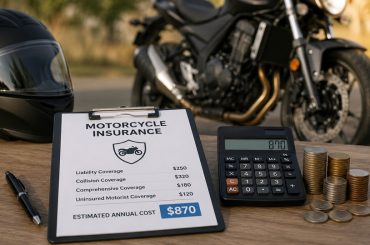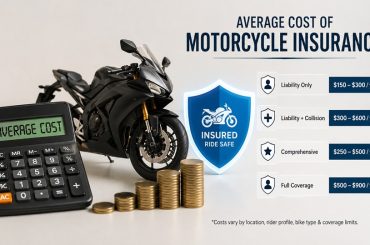
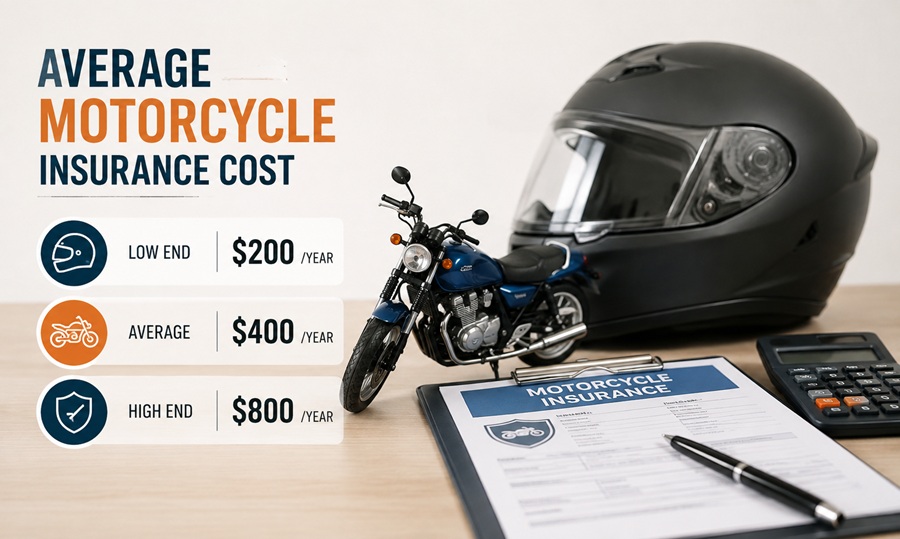
Most motorcycle riders in the United States pay somewhere between $75 and $300 per year for a basic liability policy, and closer to $300 to $1,000 annually for a full coverage plan that includes collision and comprehensive protection. That range is wide because motorcycle insurance pricing depends heavily on the rider, the bike, and where the policy is written.
If you’re shopping for a quote right now, that number gives you a starting point. The rest of this comes down to understanding why your price might land near the low end, the high end, or somewhere outside that range entirely, and what you can actually do about it.
Why the Range Is So Wide
Two riders with the same zip code can get quotes that differ by hundreds of dollars. Insurers price motorcycle policies using a mix of factors, and each one moves the number independently rather than blending into one average.
Bike type matters more than almost anything else. A small-displacement standard or cruiser is cheap to insure because it’s cheap to repair and rarely involved in high-speed claims. A sport bike in the 600cc-plus range often costs two to three times more, since insurers associate that category with higher accident severity and theft rates.
Rider age and experience carry similar weight. A 22-year-old with one year of riding experience will almost always pay more than a 45-year-old who has held a motorcycle endorsement for two decades. Insurers use claims history data by age group, and new riders statistically file more claims in their first few years of riding.
Your claims and driving history, including violations on your regular auto policy in many cases, also feeds directly into the price. A single at-fault accident can raise your premium noticeably for several years, even if the accident itself was minor.
How Insurers Actually Calculate Your Premium
It helps to understand the calculation isn’t arbitrary. Insurers typically start with a base rate for your state and coverage type, then apply a series of multipliers based on your specific risk profile. A rating factor for bike type might multiply the base rate up for a sport bike and down for a cruiser. A separate factor adjusts for rider age and experience. Another adjusts for your driving record. Location-based factors account for local theft rates, traffic density, and weather exposure. By the time all these multipliers are applied, two riders who look similar on paper but differ in even two or three factors can end up with meaningfully different final numbers.
This is also why comparing “average cost” figures between friends rarely tells you much. The number that matters is the one calculated using your own factors.
What Actually Drives the Price Up or Down
A few factors consistently push premiums higher:
- Sport bikes, supersport models, and high-horsepower engines
- A recent at-fault accident or moving violation
- Living in an urban area with higher theft and traffic density
- Carrying low liability limits paired with high comprehensive coverage
- A lapse in prior insurance coverage
- Financing the bike, which usually requires full coverage rather than liability-only
And a few factors typically bring the number down:
- Standard, cruiser, or touring bikes with moderate engine size
- A clean driving record over the past three to five years
- Completing a state-approved motorcycle safety course
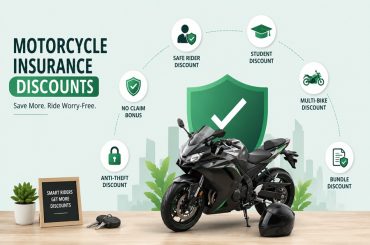
- Bundling the policy with an existing auto or home policy
- Storing the bike in a locked garage rather than on the street
- Paying the annual premium in full instead of monthly installments
State-by-State Reality
Motorcycle insurance is regulated at the state level, and minimum liability requirements vary from state to state. Some states also have higher rates of uninsured motorists, which pushes up the cost of uninsured motorist coverage specifically. Rather than expecting one number to apply everywhere, treat your state’s minimum coverage requirement as a floor, not a target. Many riders choose to carry more than the legal minimum because motorcycle accidents tend to produce more severe injuries than car accidents, and minimum liability limits can be exhausted quickly in a serious claim.
No-fault states and states with unusually high litigation rates also tend to see higher average premiums across the board, independent of any individual rider’s profile. If you’ve recently moved, it’s worth re-quoting your policy rather than assuming your old state’s pricing still applies.
Full Coverage vs. Liability Only
Liability-only coverage pays for damage and injuries you cause to others. It does not pay to repair or replace your own bike. Full coverage adds collision (damage from an accident) and comprehensive (theft, fire, weather, vandalism) protection for your own motorcycle.
If your bike is financed, your lender will typically require full coverage. If you own an older bike outright and could afford to replace it out of pocket, liability-only coverage is a common way riders keep costs down, though it leaves your own bike unprotected in a crash, theft, or weather event.
There’s also a middle ground some riders overlook: carrying comprehensive coverage without collision. This protects against theft and weather damage, which tend to be lower-probability but higher-regret events, while skipping collision coverage on an older bike that isn’t worth much to repair after a crash.
Ways to Lower a Quote You’ve Already Received
If a quote comes back higher than expected, there are a few practical levers worth pulling before accepting it. Raising your deductible on comprehensive and collision coverage lowers your premium, though it means paying more out of pocket if you file a claim. Asking specifically about every discount you might qualify for, rather than assuming the quote already includes them, often uncovers savings the initial number didn’t reflect. Bundling with an existing policy at the same company is frequently the single biggest lever available. Finally, comparing quotes from at least three insurers remains the most reliable way to find out whether your specific profile is priced competitively, since underwriting models differ enough between companies that the same rider can get noticeably different numbers.
How to Get a More Accurate Number
A generic average won’t tell you what you’ll actually pay. To get a realistic figure, gather quotes using your actual bike’s year, make, and model, your real driving record, and your specific zip code. Rates can shift meaningfully between insurers for the exact same rider, so comparing at least three quotes is worth the twenty minutes it takes.
Frequently Asked Questions
Is motorcycle insurance cheaper than car insurance?
Often, yes, especially for standard or cruiser-style bikes, since repair costs and typical claim amounts tend to be lower. Sport bikes can flip this comparison and cost more than a comparable car policy.
Does the color of my motorcycle affect my rate?
No. Color is not a rating factor insurers use. Engine size, bike type, and rider history matter far more.
Will my rate drop once I turn 25?
Many insurers apply lower rates as riders age past their mid-twenties, similar to auto insurance patterns, though this varies by company and is not guaranteed.
Do I need motorcycle insurance if I only ride seasonally?
In most states, yes, if the bike is registered and street legal, even during months you’re not riding. Some insurers offer reduced off-season rates instead of full cancellation.
Can a motorcycle safety course actually lower my premium?
Many insurers offer a discount for completing an approved course, though the size of the discount and eligibility rules vary by company and state.
How much does raising my deductible actually save?
It depends on the insurer and your coverage level, but raising a comprehensive or collision deductible typically produces a modest, noticeable reduction in premium, in exchange for a higher out-of-pocket cost if you file a claim.