
There’s no single number that answers this question honestly, but there is a reliable way to estimate your own cost before you ever request a quote. This walks through the process the way an insurer actually calculates your price, so you can build a realistic estimate for your specific situation before you start shopping.
Step 1: Identify Your Coverage Type
Start by deciding what kind of coverage you need, since this affects the price more than almost any other factor.
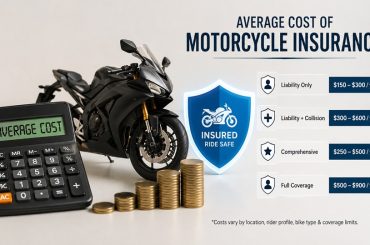
- State minimum liability: Covers damage and injury you cause to others. Cheapest option, doesn’t protect your own bike.
- Liability plus uninsured/underinsured motorist coverage: Adds protection if you’re hit by a driver without adequate insurance, which matters more in states with higher rates of uninsured drivers.
- Full coverage: Adds collision and comprehensive protection for your own motorcycle, required by most lenders if the bike is financed.
If you’re not sure which applies to you, check whether your bike is financed. If it is, full coverage is likely required by your lender regardless of preference, and it’s worth confirming the exact coverage limits your loan agreement specifies.
Step 2: Factor In Your Bike
Pull up your bike’s exact year, make, model, and engine displacement. Insurers price based on this specific combination, not a general category. As a rough guide:
- Standard and cruiser bikes under 600cc: typically the least expensive to insure
- Touring bikes: moderate pricing, with comprehensive costs affected by the bike’s replacement value
- Adventure and dual-sport bikes: generally moderate, with some increase for higher-value luggage and equipment
- Sport and supersport bikes over 600cc: typically the most expensive, especially for younger riders
If you’re still choosing between a few bikes, it’s worth getting a rough quote comparison before you buy, since the difference in insurance cost between two similarly priced bikes can be substantial.
Step 3: Factor In Your Riding History
Pull your driving record for the past three to five years. Insurers look at both auto and motorcycle-specific violations and accidents. A completely clean record puts you toward the lower end of pricing for your bike category. Recent at-fault accidents, DUIs, or multiple moving violations can increase your cost significantly, sometimes doubling it or more depending on severity and how recently they occurred.
Also consider how long you’ve held a motorcycle license or endorsement. New riders typically pay a premium for their first one to three years of coverage, regardless of how careful they actually are, simply because insurers lack individual claims data to rely on yet.
Step 4: Factor In Where You Live and Store the Bike
Your zip code affects pricing based on local accident frequency, theft rates, and state insurance regulations. Where you park the bike matters too. A locked garage generally costs less to insure than street parking, since it reduces theft and weather exposure, and some insurers ask this question directly during the quoting process.
If you split time between two locations, such as a primary residence and a seasonal address, mention this to your insurer, since it can affect both pricing and coverage in ways that aren’t always obvious from a single zip code entry.
Step 5: Apply Realistic Discounts
Before finalizing your estimate, factor in discounts you’re likely to qualify for:
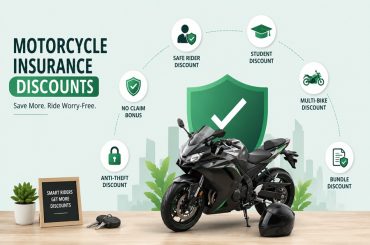
- A motorcycle safety course completion
- Bundling with an existing auto or home policy
- A multi-bike policy if you own more than one motorcycle
- Anti-theft devices installed on the bike
- A clean, multi-year driving record
These can meaningfully reduce your estimate, though the exact combined savings depends entirely on the insurer’s specific discount structure, so treat this step as a directional adjustment rather than a precise calculation.
Step 6: Put It Together
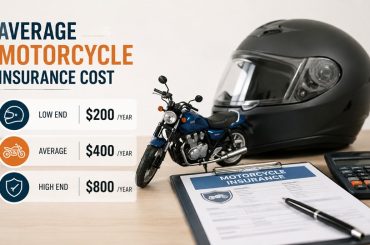
Once you’ve identified your coverage type, bike category, riding history, and location, you have enough information to expect a realistic range rather than guessing blindly. A rider with a clean record on a standard 500cc bike in a low-theft suburban area, carrying liability-only coverage, will land toward the lower end of typical pricing. A new rider on a 1000cc sport bike in a dense urban area, carrying full coverage, will land considerably higher, sometimes several times the amount.
Step 7: Build a Simple Comparison Worksheet
If you’re evaluating more than one bike or coverage option, it helps to lay the variables out side by side rather than keeping them in your head. Note the bike’s category, your expected coverage type, your driving record status, and your storage situation for each option you’re considering. This makes it easier to see which factors are actually driving a price difference between two scenarios, rather than assuming the total number alone tells the whole story.
Step 8: Get Actual Quotes
An estimate built this way is useful for budgeting, but it isn’t a substitute for real quotes. Once you know your category, request quotes from at least three insurers using your actual information. Rates for the same rider can differ significantly between companies, and the only way to find the best price is to compare directly rather than relying on a single insurer’s number.
When requesting quotes, have your driver’s license, motorcycle endorsement date, VIN if you already own the bike, and details of any safety course or anti-theft device ready. Providing complete information up front generally produces a more accurate first quote and reduces the chance of the price changing later once the insurer verifies your details.
Frequently Asked Questions
Can I estimate my cost without knowing my exact bike model yet?
You can get a rough range based on general bike category, such as standard, cruiser, sport, or touring, but an accurate estimate requires the specific year, make, and model once you’ve chosen a bike.
Does my auto insurance history affect my motorcycle insurance cost?
Many insurers do consider your broader driving record, including violations on your auto policy, when pricing a motorcycle policy.
How much does financing a motorcycle affect insurance cost?
Financing itself doesn’t directly raise your rate, but it typically requires full coverage instead of liability-only, which increases the total premium compared to a liability-only policy.
Will my estimate change significantly if I add a second rider or passenger?
Occasional passengers usually don’t change pricing under a standard policy, but adding a second regular rider to the policy, especially a less experienced one, can affect the premium.
Is it worth getting quotes before I even buy the bike?
Yes. Getting a quote for a specific model you’re considering, before purchasing, can help you understand insurance costs as part of your total ownership budget rather than discovering them after the fact.
What information should I have ready before requesting a quote?
Your driver’s license, motorcycle endorsement date, the bike’s VIN if you already own it, your driving record details, and information about any safety course or anti-theft device will help produce the most accurate quote.