Riders who take the time to ask their insurer about available discounts often end up paying noticeably less than riders who accept the first quote they receive. The discounts exist. The problem is that most companies don’t apply them automatically unless you specifically qualify and, in some cases, specifically request them.
Here’s a breakdown of the discounts that actually move the needle, organized by how you qualify for each one, along with practical guidance on making sure you actually receive them.
Discounts Based on Who You Are as a Rider
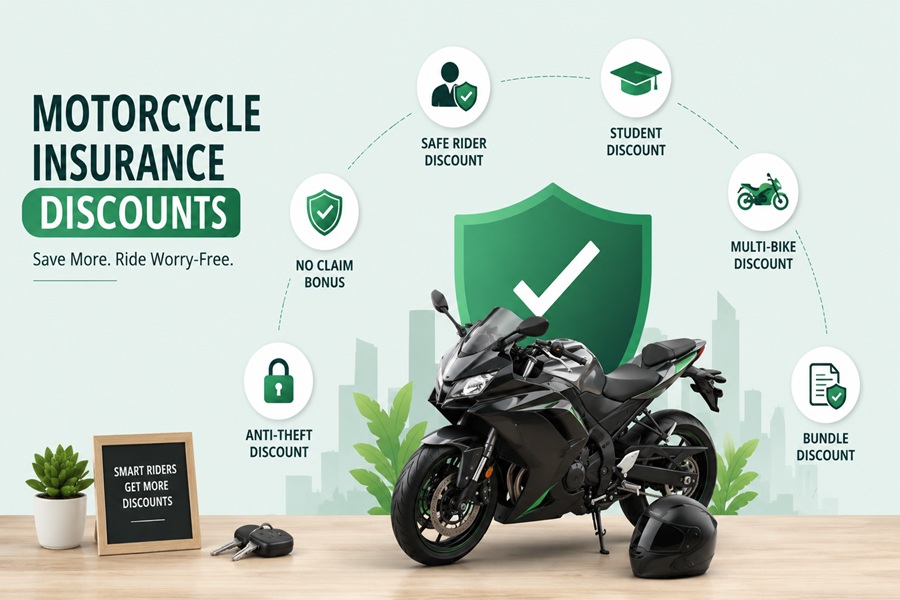
Safe driving discount – A clean record with no accidents or moving violations, usually over a three-to-five-year window, is one of the largest discount categories available. Insurers reward this because claims history is the single strongest predictor of future claims.
Mature rider discount – Riders over a certain age, commonly 50 or 55 depending on the insurer, sometimes qualify for a reduced rate tied to statistically lower claim frequency in that age group.
Motorcycle safety course discount – Completing a state-approved rider training course, such as one recognized by the Motorcycle Safety Foundation, can qualify you for a discount with many insurers. This is one of the few discounts a brand-new rider can earn immediately, without years of clean history behind them.
Continuous coverage discount – Riders who have held motorcycle insurance without a lapse, even across different insurers, are sometimes rewarded with a loyalty-style discount. A gap in coverage, even a short one, can remove eligibility for this discount and increase your base rate at the same time.
Discounts Based on Your Policy Setup
Multi-policy or bundling discount – Combining your motorcycle policy with an existing auto, home, or renters policy through the same company typically produces one of the biggest single discounts available. Insurers price bundled customers more favorably because they’re more profitable overall and less likely to switch companies.
Multi-bike discount – If you own more than one motorcycle, insuring them together on one policy is usually cheaper than running separate policies, and simplifies renewal and claims administration as well.
Paid-in-full discount – Paying the full annual premium up front instead of monthly often earns a discount, since it removes the insurer’s risk of missed payments and installment processing costs.
Paperless and autopay discounts – Smaller than the others individually, but signing up for electronic billing and automatic payments frequently shaves a bit off the total, and many insurers apply both automatically once you opt in.
Renewal or loyalty discount – Some insurers gradually reduce your rate the longer you stay with them, as long as your claims history remains clean, though this isn’t universal and is worth asking about directly at renewal time.
Discounts Based on the Bike Itself
Anti-theft device discount – Alarms, disc locks, GPS trackers, and other approved anti-theft equipment can lower your comprehensive coverage cost, since theft claims are a major cost driver in motorcycle insurance.
Garaging discount – Keeping the bike in a locked garage overnight, rather than parked on the street, reduces theft and weather risk and is sometimes reflected in the rate.
Low mileage discount – Riders who put fewer miles on their bike each year, especially those who ride seasonally or as a weekend hobby, may qualify for a lower rate since exposure to accidents drops with mileage.
New or well-maintained bike discount – Some insurers offer modest discounts for newer bikes equipped with factory safety features like anti-lock brakes, since ABS-equipped motorcycles show lower claim severity in accident data.
Discounts Tied to Membership or Affiliation
Some insurers offer reduced rates for members of certain motorcycle associations or owners’ clubs. Military members and veterans may also have access to specialized discounts through certain insurers. Alumni associations and some professional or employer groups occasionally have insurance partnerships as well. Eligibility and savings vary widely, so it’s worth mentioning any affiliations when you request a quote rather than assuming the insurer already knows.
How Much Can These Discounts Actually Add Up To
No insurer publishes a guaranteed combined savings figure, since discounts stack differently depending on the company and state. That said, riders who qualify for several of the categories above, a clean record, a completed safety course, a bundled policy, and an anti-theft device, often see a materially lower final premium compared with a rider who has none of those factors working in their favor. The exact percentage depends entirely on the insurer’s rules, so it’s more useful to think of discounts as compounding advantages rather than a fixed dollar amount you can count on in advance.
How to Actually Claim These Discounts
Discounts are rarely stacked automatically into a quote without prompting. When you call or fill out an online application, be specific: mention your safety course certificate, your anti-theft device, your other policies with the company, and your garaging situation. If a discount doesn’t appear on your quote and you believe you qualify, ask directly. It’s common for a discount to require documentation, like a course completion card, that the insurer won’t chase down for you on its own.
It’s also worth revisiting your policy once a year. Riders who complete a safety course two years into owning a policy, or who add a home policy with the same insurer later, don’t always get those discounts applied retroactively unless they call and update their account. Set a reminder around your renewal date each year to review what’s changed and ask whether anything new qualifies you for additional savings.
Common Mistakes That Cost Riders Money
A few patterns show up repeatedly among riders paying more than they need to. Letting a policy lapse for even a short window between bikes or insurers often resets continuous coverage credit. Assuming a discount was already applied without confirming it on the declarations page is another common oversight. And sticking with the same insurer year after year without re-shopping can mean missing better pricing elsewhere, since discount structures and underwriting appetite change over time even at companies you’ve been loyal to.
Frequently Asked Questions
Can I combine multiple discounts on one policy?
Yes, in most cases discounts stack, though some insurers cap the total percentage you can save regardless of how many discounts apply.
Do all insurers offer the same discounts?
No. Discount programs vary significantly between companies, which is one reason comparing quotes from multiple insurers is worth the effort.
Is a motorcycle safety course worth it just for the discount?
The discount alone may not fully offset the course cost in the first year, but combined with the skills gained and potential long-term rate benefits, many riders find it worthwhile.
Does my credit score affect motorcycle insurance discounts?
In many states, insurers factor credit-based insurance scores into overall pricing, though this is regulated differently by state, and a few states prohibit its use entirely.
Will adding anti-theft equipment lower my full policy or just part of it?
Anti-theft discounts typically apply to the comprehensive portion of your coverage, since that’s the part of the policy that covers theft.
Should I ask about discounts before or after getting a quote?
Before, if possible. Providing information about your safety course, anti-theft device, and other policies up front lets the insurer build those discounts into the initial quote rather than requiring a follow-up adjustment.