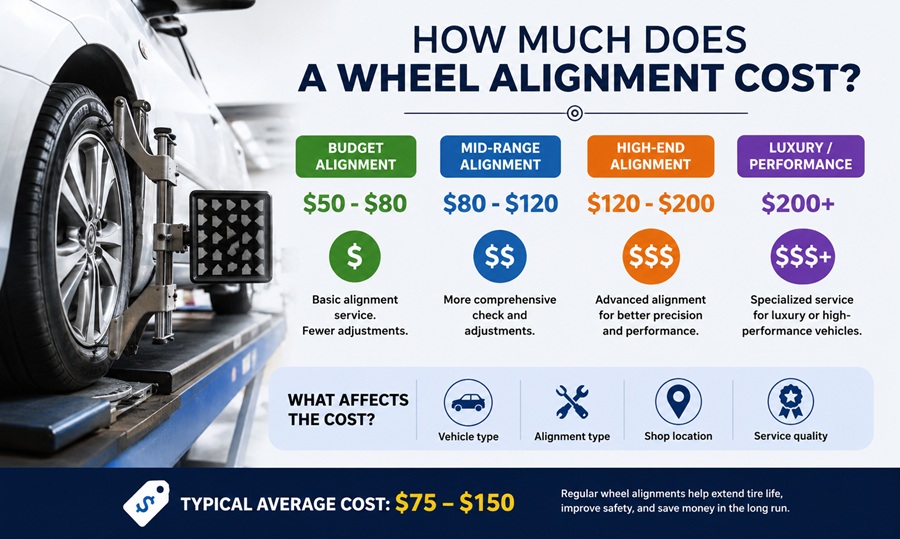
A standard wheel alignment costs between $75 and $200 at most U.S. shops, with a basic front-end alignment on the lower end and a full four-wheel alignment on the higher end. Dealerships tend to charge more than independent shops, while tire retailers often bundle alignment into service packages. The final price depends on your vehicle type, the shop’s equipment, and whether adjustments require replacement parts before the alignment can even be performed.
Quick Checklist: Signs You Need an Alignment
Before booking an appointment, check for these common warning signs:
- Your car pulls to one side on a flat, straight road
- The steering wheel sits off-center when driving straight
- Tires show uneven wear on the inner or outer edges
- You feel vibration through the steering wheel
- You recently hit a pothole, curb, or had suspension work done
- The steering wheel doesn’t return to center naturally after a turn
If two or more of these apply, an alignment check is worth scheduling even if you’re not due for regular maintenance. Waiting too long after noticing these signs usually means more tire wear by the time you finally book the appointment.
Detailed Cost Guide by Alignment Type
Two-Wheel (Front-End) Alignment
A two-wheel alignment adjusts only the front axle and typically costs $75 to $100. This works for older rear-wheel-drive vehicles with a solid rear axle that doesn’t need separate adjustment, since the rear geometry on those vehicles is fixed and can’t be adjusted anyway.
Four-Wheel Alignment
Most modern cars, including all-wheel-drive and front-wheel-drive models, need a four-wheel alignment since all four wheels can shift out of position independently. This runs $100 to $200 on average, and it’s the more common service requested today. Vehicles with independent rear suspension, which describes the vast majority of cars sold in the last two decades, fall into this category by default.
Lifetime Alignment Packages
Some tire shops sell lifetime alignment plans for $150 to $250 upfront, which covers unlimited alignments for as long as you own the vehicle and the tires. This can save money for drivers who get alignments checked every 6 months as recommended, especially those who drive on rough roads or hit potholes frequently enough that alignment tends to drift.
Specialty and Performance Vehicle Alignment
Trucks with adjustable suspension, lifted vehicles, and performance cars with camber plates or coilovers often require a specialized alignment that can cost $150 to $300 due to the extra adjustment points and the technician time needed to dial in custom settings correctly.
What Affects Alignment Pricing?
Shop type makes the biggest difference. Independent shops and tire retailers generally charge less than dealership service centers for the same work, sometimes by as much as 30 to 40 percent for an identical four-wheel alignment. Vehicle type matters too. Trucks, SUVs, and performance cars with adjustable suspension components often cost more to align than a standard sedan because of the extra adjustment points and the additional time required on the alignment rack.
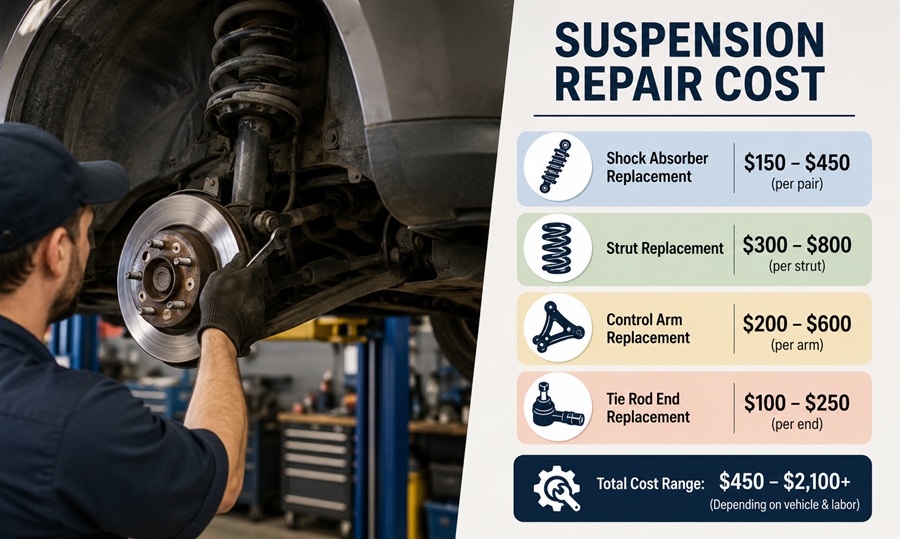
If the alignment reveals worn or bent parts like tie rods, control arm bushings, or ball joints, those repairs get added separately and can push the total well beyond the base alignment price. A shop should always explain these added costs before doing the work, and a trustworthy shop will show you the misaligned readings on their machine so you can see the issue rather than just taking their word for it.
Geographic location also plays a role. Labor rates in major metro areas along the coasts tend to run higher than in smaller towns or rural areas, which can shift the same basic alignment service by $20 to $40 depending on where you live.
Should You Get an Alignment Every Tire Change?
Getting an alignment check whenever you install new tires is a smart habit, even if it’s not strictly required every time. New tires wear faster on a misaligned vehicle, so starting them on correctly aligned wheels protects your investment. Many tire shops offer a discounted alignment when purchased alongside a new tire set, sometimes bundling it into the total price of the tires themselves rather than charging separately.
Skipping this step to save money upfront often costs more later, since a set of new tires can wear unevenly within just a few thousand miles on a car that’s out of alignment, effectively wasting a portion of what you just spent on rubber.
Tips to Save Money on Alignment
Ask about bundled pricing when buying tires, since many retailers discount alignment as part of a full tire purchase. Watch for seasonal promotions, especially in spring and fall when shops run alignment specials to bring in customers after harsh winter driving or before road trip season. Compare a couple of local quotes before booking, since prices for the same service can vary by $50 or more between shops in the same area. Finally, consider a lifetime alignment plan if you plan to keep your vehicle for several years, since it usually pays for itself after two or three visits.
How Long Does an Alignment Take?
A standard alignment appointment takes about 45 minutes to an hour for most vehicles. If the technician finds worn suspension components that need replacing first, the appointment can stretch to a few hours or require a return visit once parts arrive. It’s worth asking upfront whether the shop can inspect suspension components before starting, so you’re not surprised by a longer wait or a second trip.
What Happens During an Alignment Service?
A technician places your vehicle on a specialized alignment rack with sensors attached to each wheel. The machine measures camber, caster, and toe angles against the manufacturer’s specifications, then the technician makes adjustments to bring each measurement back within range. You’ll typically get a printout showing before-and-after readings, which is worth keeping in case you have questions later or need to reference it for a future visit.
Frequently Asked Questions
Is a wheel alignment covered under warranty?
Alignment itself usually isn’t covered under a manufacturer’s warranty since it’s considered routine maintenance, though some new-vehicle purchases include a complimentary first alignment.
How often should you get an alignment?
Most manufacturers recommend checking alignment every 6,000 miles or once a year, and immediately after hitting a significant pothole or curb.
Can a bad alignment damage tires permanently?
Yes. Driving for thousands of miles on a misaligned vehicle can wear tires down to the point where they need early replacement, even if the tires themselves were high quality.
Does alignment affect gas mileage?
Yes, a misaligned vehicle creates extra rolling resistance, which makes the engine work harder and can measurably reduce fuel economy over time.