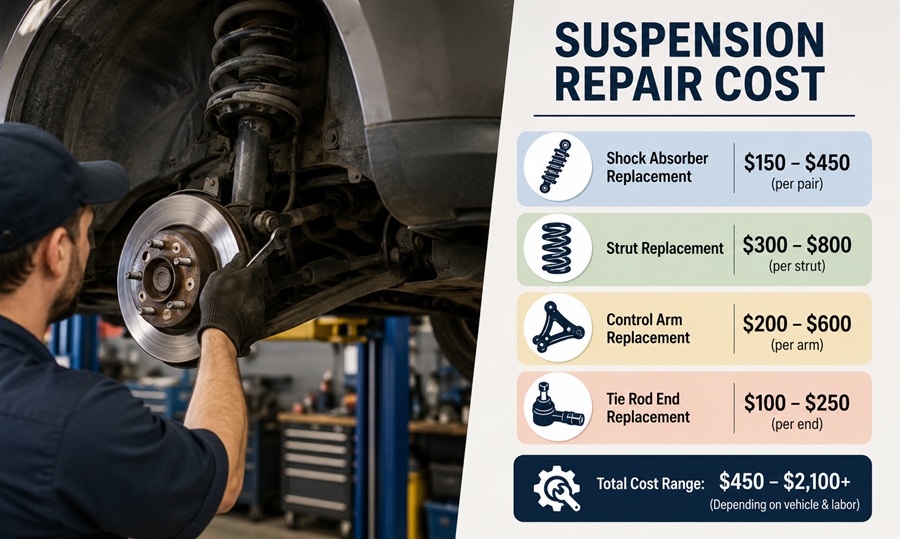
Suspension repair costs typically range from $100 for a single sway bar link to over $1,500 for a full strut and control arm replacement across multiple wheels. The exact price depends on which parts need work, your vehicle’s make and model, and whether you choose a dealership, independent shop, or DIY approach. Most drivers pay somewhere between $250 and $700 for a common repair like replacing a pair of struts or shocks.
Cost Breakdown by Suspension Part
Suspension systems have several components that wear out at different rates, and each comes with its own price range for parts and labor.
- Shock absorbers (pair): $150 to $400
- Struts (pair, including labor): $400 to $800
- Control arms (each): $200 to $400
- Ball joints (each): $150 to $300
- Sway bar links (each): $75 to $150
- Wheel bearings (each): $150 to $350
- Strut mounts (pair): $150 to $300
- Full suspension overhaul (all major components): $1,500 to $3,000
These numbers reflect nationwide averages. Luxury and performance vehicles with adjustable or air suspension systems can run significantly higher, sometimes two to three times these figures for the same category of repair. Air suspension in particular, common on many SUVs and luxury sedans, can push a single corner repair past $1,000 once you include the air strut assembly, compressor diagnostics, and labor.
Repair Options: What You Can Fix vs. Replace
Repairing a Single Component
If only one part has failed, such as a worn ball joint or a broken sway bar link, replacing just that part is the most cost-effective route. This is common after hitting a pothole or curb hard enough to damage one specific connection point, and it’s usually the fastest repair to schedule since parts availability is rarely an issue for common components.
Replacing in Pairs
Shocks, struts, and control arms are almost always replaced in pairs, even if only one side shows visible damage. The other side has usually absorbed similar mileage and stress, and replacing both at once avoids uneven handling and a second repair bill soon after. Most experienced mechanics will recommend this even when it adds cost upfront, simply because the labor to access the second side is already largely done once the first side is apart.
Full Suspension Replacement
A full suspension rebuild makes sense for older, high-mileage vehicles where multiple components are wearing out around the same time, or for a vehicle you plan to keep for many more years. While the upfront cost is higher, it avoids repeated shop visits for one failing part after another, and many shops offer a modest labor discount when multiple components are replaced during a single visit since some of the disassembly work overlaps.
Recommendations for Getting the Best Value
Get a written estimate that breaks down parts and labor separately, so you can compare quotes accurately between shops. Ask whether the shop recommends OEM parts or aftermarket alternatives, since aftermarket parts can cut costs by 20 to 40 percent without sacrificing much in reliability for most daily drivers. Brands like Monroe, KYB, and Moog are widely used aftermarket options that many independent shops trust for standard suspension work.
If your suspension issue stems from a specific event like hitting a pothole, check whether your auto insurance covers the damage, since some policies include this under collision coverage rather than treating it as routine wear and tear. It’s also worth asking your shop whether they warranty their labor separately from the parts warranty, since some shops offer a longer labor guarantee that can save you money if a repair doesn’t hold up.
What Causes Suspension Problems?
Suspension wear speeds up from hitting potholes, curbs, or speed bumps too fast, carrying heavy loads regularly, or simply reaching high mileage where rubber bushings and seals naturally break down. Salted winter roads in colder states can also corrode metal suspension components faster than in drier climates, which is worth factoring in if you live somewhere with harsh winters, since rust can seize bolts and complicate what would otherwise be a straightforward repair.
Towing beyond your vehicle’s rated capacity, frequently driving on unpaved or gravel roads, and skipping recommended suspension inspections during routine service visits all contribute to faster wear as well. A vehicle used for regular towing or hauling will often need suspension attention years before an equivalent vehicle used only for commuting.
Signs You Need Suspension Repair
A rougher ride than usual, a car that bounces excessively after a bump, uneven tire wear, or a clunking noise over rough roads are the most common warning signs. Pulling to one side while braking can also point to a suspension issue rather than an alignment problem, so it’s worth having a technician check both. A vehicle that dips noticeably at one corner when parked on level ground, sometimes called a “sagging” corner, usually points to a failed spring or air strut and shouldn’t be ignored.
How a Technician Diagnoses Suspension Issues
Most shops start with a visual inspection, checking for leaking fluid on struts and shocks, cracked or torn bushings, and play in ball joints by physically moving the wheel while it’s off the ground. A bounce test, where the technician pushes down firmly on each corner of the car and watches how quickly it settles, can reveal worn shocks or struts without needing to remove anything. This kind of upfront diagnostic usually takes 20 to 30 minutes and is often included free with an estimate.
Frequently Asked Questions
Is it safe to drive with a suspension problem?
Minor issues like a worn bushing usually aren’t an immediate safety risk, but a broken control arm or failing ball joint can cause loss of steering control and should be repaired before continued driving.
Does insurance cover suspension repair?
Only if the damage resulted from a covered event like a collision or road hazard under comprehensive coverage. Wear-and-tear failures are considered maintenance and aren’t typically covered.
How long do suspension repairs take?
A single component replacement usually takes 1 to 3 hours, while a full suspension overhaul can take a full day or longer depending on parts availability.
Can bad suspension affect braking distance?
Yes. Worn shocks and struts reduce how well your tires stay in contact with the road during braking, which can meaningfully increase stopping distance, especially on rough or wet pavement.