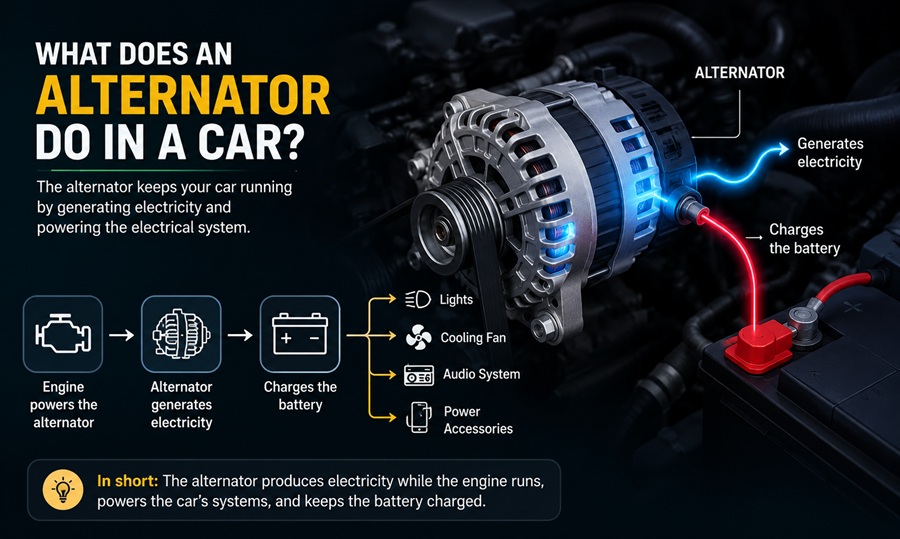
An alternator keeps your car’s battery charged and powers the electrical system while the engine runs. It converts mechanical energy from the spinning engine into electrical energy, using a rotating magnet and a set of copper coils to generate current. That current recharges the battery and runs everything from headlights to the radio. Without a working alternator, a fully charged battery typically drains within one to two hours of driving. Most alternators last somewhere between 80,000 and 150,000 miles before they need replacement.
That’s the short version. Below are the questions drivers ask most often about alternators, answered in plain language, along with a couple of real-world examples that show why this small part matters so much.
What Is an Alternator, Exactly?
An alternator is a small generator bolted to the engine, usually near the front, and connected by a serpentine belt. As the engine turns, the belt spins the alternator’s internal rotor. That spinning motion produces electricity, which flows out through the alternator’s wiring harness to the battery and the rest of the car’s electrical system. It’s roughly the size of a large grapefruit but does a job that keeps the entire vehicle running.
How Does an Alternator Work?
Inside the alternator, a spinning rotor (an electromagnet) passes by a stationary set of wire coils called the stator. This motion produces alternating current, or AC power. Since a car runs on direct current, or DC power, the alternator uses a set of diodes to convert AC to DC before sending it to the battery. A voltage regulator, either built into the alternator or mounted separately, keeps the output steady so it doesn’t overcharge the battery or damage sensitive electronics.
What’s the Difference Between an Alternator and a Battery?
The battery’s job is to store energy and provide the burst of power needed to start the engine. Once the engine is running, the alternator takes over, supplying power to everything electrical and topping off the battery at the same time. Think of the battery as a reserve tank and the alternator as the pump that keeps refilling it. A weak battery and a failing alternator can cause nearly identical symptoms, which is one reason many drivers misdiagnose the problem.
Why Does My Alternator Make a Whining Noise?
A whining or grinding noise from the alternator usually points to worn bearings inside the unit, a loose serpentine belt, or a pulley that’s starting to fail. The sound often gets louder as engine speed increases. Ignoring it for too long can lead to a complete alternator failure, sometimes without much additional warning.
How Do I Know If My Alternator Is Failing?
A handful of symptoms tend to show up together when an alternator is on its way out:
- Dimming or flickering headlights and dashboard lights
- A battery warning light on the dashboard
- A dead battery even after a recent jump start
- Slow power windows or a radio that cuts in and out
- A burning rubber smell from a slipping belt
- Strange grinding or whining noises from the engine bay
If two or more of these show up at once, it’s worth having the charging system tested rather than assuming it’s just the battery.
Can You Drive With a Bad Alternator?
Technically, yes, for a short distance. Once the alternator stops charging properly, the car runs on whatever power is left in the battery. Depending on how many electrical accessories are running, that might last anywhere from a few minutes to an hour. Driving with a failing alternator is risky because the car can stall unexpectedly, sometimes in traffic, and once the battery is fully drained, the vehicle won’t restart on its own.
How Long Do Alternators Last?
Most alternators are built to last between 80,000 and 150,000 miles, or roughly seven to ten years under normal conditions. Heavy use of electrical accessories, frequent short trips that don’t let the battery fully recharge, and extreme heat can all shorten that lifespan. Regular maintenance, including keeping the serpentine belt in good shape, goes a long way toward getting the full life out of the part.
When Should You Replace an Alternator?
Replace the alternator as soon as testing confirms it’s not producing enough voltage, generally anything below 13.5 volts at idle with the engine running. Waiting until it fails completely usually means getting stranded, since there’s rarely a long warning period once output drops significantly. A mechanic can test alternator output in about ten minutes using a multimeter or a load tester, so it’s worth checking before assuming the worst.
A Real Example: The Jump-Start Trap
A common scenario looks like this: a driver’s car won’t start one morning, so they get a jump start from a neighbor. The car runs fine all day. The next morning, it won’t start again. This pattern, needing repeat jump starts within a day or two, almost always points to a failing alternator rather than a bad battery. A battery that’s simply old will usually hold a charge for several days after a jump, while a bad alternator won’t recharge it at all.
Should You Replace the Alternator or the Battery First?
When a car won’t start, it’s tempting to just replace the battery and hope for the best. A better approach is to have both tested at the same time, since most auto parts stores and repair shops can check battery health and alternator output in a few minutes at no charge. Replacing only the battery when the alternator is actually the problem means the new battery will drain again within days, and the labor gets paid twice instead of once.
Quick Diagnostic Checklist
- Headlights dim noticeably at idle, then brighten when you rev the engine
- Dashboard battery light stays on after startup
- Car needs a jump start more than once in a week
- Whining noise changes pitch with engine speed
- Electrical accessories act sluggish or inconsistent
Frequently Asked Questions
Can a bad alternator drain a battery?
Yes. A failing alternator either undercharges or overcharges the battery, and both situations can shorten battery life or drain it completely while driving.
How much does it cost to replace an alternator?
Parts and labor typically run between $400 and $900 in the United States, depending on the vehicle and whether it’s a dealership or independent shop doing the work.
Can I replace an alternator myself?
On many vehicles, yes, with basic tools and a repair manual. Some newer cars have tightly packed engine bays that make the job harder, so it depends on the model.
What happens if you don’t fix a bad alternator?
The battery eventually drains completely, the car stalls or won’t restart, and continued driving on a failing charging system can damage the battery and other electrical components.