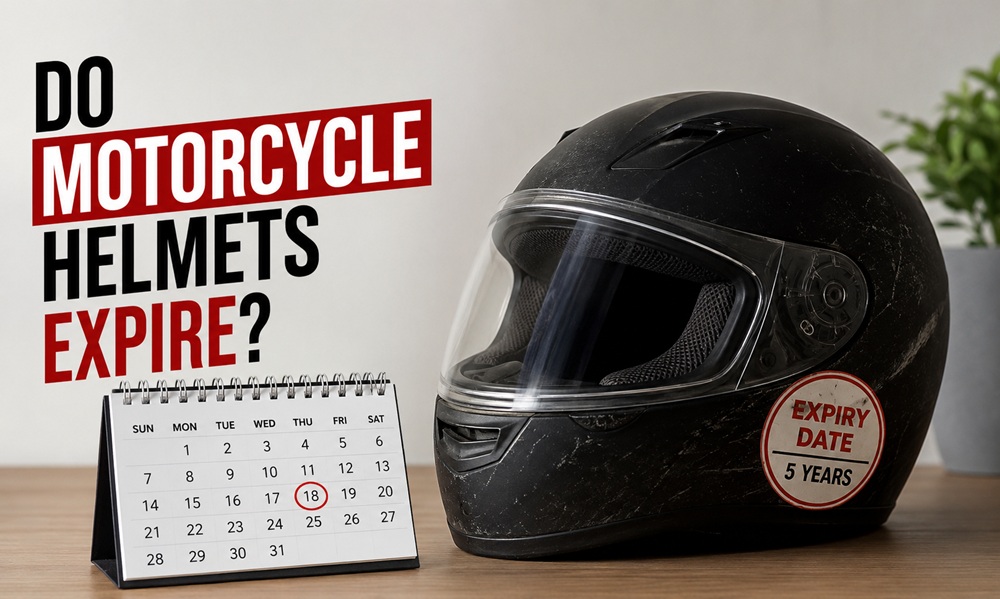
Yes, motorcycle helmets expire. Most manufacturers recommend replacing a helmet every 5 years from the manufacture date, even if it has never been dropped or crashed. The foam liner and adhesives break down over time from heat, sweat, UV exposure, and oxidation, which reduces the helmet’s ability to absorb impact during a crash.
That answer surprises a lot of riders. A helmet can look brand new on the outside while the protective materials underneath have already weakened. Understanding why this happens, and separating the myths from the facts, helps you make a smarter decision about when to buy a new one.
Myth vs Reality: What Riders Get Wrong About Helmet Expiration
Myth: A helmet lasts forever if it’s never been in a crash. Reality: Materials degrade with age regardless of crash history. Heat cycles from sitting in a hot garage or under direct sun break down the expanded polystyrene (EPS) foam liner, the part that actually absorbs impact energy.
Myth: If the shell isn’t cracked, the helmet is fine. Reality: The outer shell can look perfect while the EPS foam inside has compressed or crumbled. Damage isn’t always visible from the outside.
Myth: Expensive helmets don’t expire as fast as cheap ones. Reality: All helmets use similar foam technology, so price doesn’t change the basic aging timeline. A premium helmet still needs replacement on roughly the same schedule.
The Facts: Why Helmets Break Down Over Time
Three main factors cause helmet aging. First, UV exposure breaks down the resin in the outer shell, making it more brittle. Second, sweat and body oils slowly degrade the foam and the comfort liner from the inside. Third, the glue holding the shell layers together loses strength with repeated heat and cold cycles.
Riders who store their helmet in a hot car trunk or leave it strapped to a bike in direct sunlight speed up this process significantly. A helmet kept in a cool, dry closet will generally age slower than one left outside in summer heat.
How Long Do Helmets Actually Last?
Most manufacturers, including Shoei, Arai, and Bell, recommend a 5-year replacement cycle from the manufacture date, not the purchase date. Check the sticker inside the helmet, usually on the chin strap or inner liner, for the manufacture month and year.
Frequently Asked Questions
What Is the Average Helmet Lifespan?
The average lifespan is about 5 years from the date of manufacture under normal use and storage conditions. Heavy use, frequent sun exposure, or hot climates can shorten that to 3 to 4 years.
Can You Use an Old Helmet If It Looks Fine?
It’s not recommended. A helmet’s protective performance depends on internal foam structure you can’t see by looking at it. Cosmetic condition is not a reliable indicator of safety.
Should You Replace a Helmet After a Crash?
Yes, always. Even a minor drop can compress the foam liner in ways that aren’t visible but still reduce protection during a future impact. Replace the helmet after any crash or hard drop, regardless of how it looks.
How Do You Know When to Replace Your Helmet?
Check the manufacture date sticker first. Replace at the 5-year mark, after any crash, if the padding has become loose or compressed, or if the strap or buckle shows wear. When in doubt, a local gear shop can inspect it for you.
Practical Advice for Riders
Write the purchase date and manufacture date somewhere you’ll remember, like a note in your phone. Store your helmet indoors, away from direct sunlight and extreme heat, and avoid leaving it on the seat or mirror where UV rays hit it daily.
If you ride often in hot climates, consider replacing your helmet closer to the 3-year mark instead of waiting the full 5 years. A new helmet is a relatively small cost compared to the protection it provides during a crash, and it’s one of the few pieces of gear where cutting corners carries real risk.