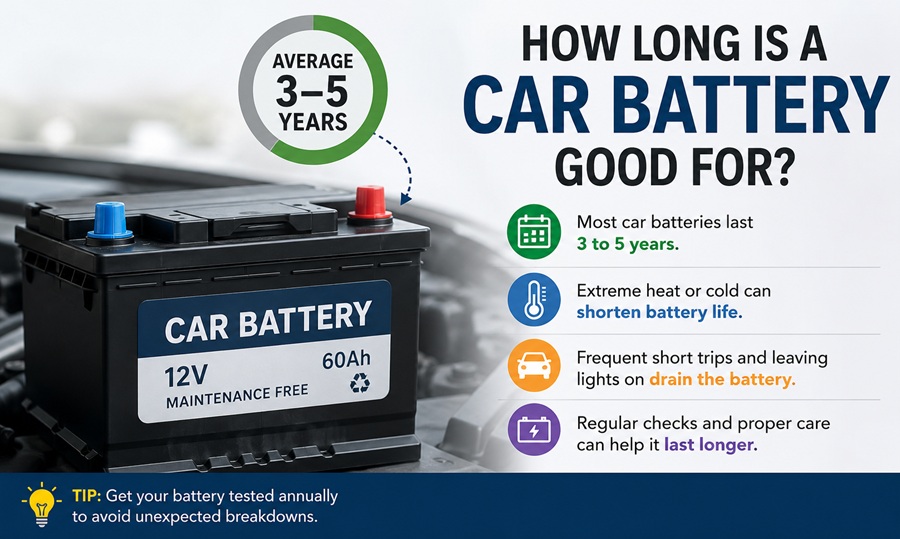
Most car batteries last 3 to 5 years under normal use. Batteries in hot climates tend to wear out faster, closer to the 3-year mark, while batteries in milder climates with regular driving can last closer to 5-6 years. Heat, short trips, and age are the biggest factors that shorten battery life.
That’s the short version. Here’s the reality behind those averages, the myths worth ignoring, and how to actually know when yours is on its way out.
Myth vs. Reality: Car Battery Lifespan
Myth: A battery just dies suddenly with no warning. Reality: Batteries almost always decline gradually. Slow cranking, dimming headlights at idle, and needing a jump start more than once are all warning signs that show up weeks or months before a full failure.
Myth: Cold weather kills batteries. Reality: Cold weather exposes a battery that’s already weak — it doesn’t usually cause the damage itself. Heat is actually the bigger long-term culprit, since it accelerates the internal chemical breakdown that shortens battery life. Cold weather just makes a weakened battery unable to deliver enough power to start the engine.
Myth: A battery that starts the car is a healthy battery. Reality: A battery can start the car and still be significantly degraded. Starting only requires a burst of power for a couple of seconds, which a partially failing battery can often still deliver, right up until it can’t.
What Shortens a Car Battery’s Life?
A handful of everyday factors add up over time and determine whether your battery lasts 3 years or 6.
- Heat exposure. High temperatures speed up the internal corrosion process inside the battery, which is why batteries in hot climates fail sooner on average.
- Short trips. Driving under 20 minutes regularly doesn’t give the alternator enough time to fully recharge the battery after starting, leading to a chronic partial charge.
- Extended parking. A car left unused for weeks lets the battery slowly self-discharge, and repeated deep discharges shorten its usable life.
- Vibration and poor mounting. A loose battery tray lets the battery shake during driving, which can damage internal components over time.
- Electrical accessories. Aftermarket stereos, lights, or chargers left plugged in can draw power even when the car is off, straining the battery.
Can You Tell How Old Your Battery Is?
Yes. Every car battery has a manufacture date stamped on it, usually near the terminals, shown as a letter and number combination — the letter represents the month (A for January, B for February, and so on) and the number represents the year. A code reading “D4” means April 2024. If your battery is unmarked or the code is worn off, most auto parts stores can look it up from the battery’s serial number.
What Are the Signs of a Dying Car Battery?
Watch for these signals, especially as your battery passes the 3-year mark:
- Slow or hesitant engine cranking, especially in the morning
- Dashboard warning lights flickering or the battery warning light turning on
- Headlights that dim noticeably when idling
- A clicking sound instead of the engine turning over
- The need for a jump start more than once in a short period
- A swollen or misshapen battery case, which can happen in extreme heat
Any one of these on its own might be minor. Two or more together usually means it’s time for a replacement, not just a charge.
Should You Replace a Battery Before It Fails?
If your battery is past the 4-year mark and showing any of the warning signs above, replacing it proactively is usually the smarter move. A dead battery rarely fails at a convenient time, and the cost of a planned replacement is the same as an emergency one — minus the tow truck or roadside assistance call.
A simple way to decide: if a battery test at an auto parts store (most offer this for free) shows reduced capacity below 70-80% of its rated output, replacement is worth doing before it strands you.
Regional Differences: Hot vs. Cold Climates
Local climate has a real, measurable effect on battery lifespan.
In hot climates — the desert Southwest, the Gulf Coast, and similar regions — batteries typically last 2.5 to 4 years due to sustained high temperatures accelerating internal degradation. Drivers in these areas benefit from testing battery health every 6 months once the battery passes year 2.
In colder, milder climates, batteries can often reach 5-6 years, but cold snaps are when a weakened battery is most likely to finally fail, since starting an engine in freezing temperatures demands significantly more power. Testing before winter is the most useful habit for drivers in these regions.
How to Extend Your Car Battery’s Life
- Drive regularly, including occasional trips over 20 minutes to let the battery fully recharge
- Keep terminals clean and free of corrosion buildup
- Have the battery load-tested once a year after it passes the 3-year mark
- Avoid leaving accessories plugged in or lights on when the car is off
- Make sure the battery is securely mounted to reduce vibration damage
Frequently Asked Questions
How do I know my car battery is bad and not the alternator?
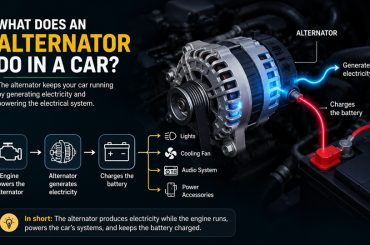
A load test at an auto parts store distinguishes between the two. If the battery holds a charge but the car still struggles to start after driving, the alternator is more likely the issue, since it should be recharging the battery while you drive.
Does turning off the car often shorten battery life?
Frequent short trips with the engine off in between don’t allow full recharging, which can shorten battery life over time, but this is different from simply turning the car off normally at the end of a drive.
Can a car battery last longer than 6 years?
It’s possible with a high-quality battery, mild climate, and consistent driving habits, but it’s uncommon. Most batteries show measurable performance decline well before the 6-year mark, even if they haven’t fully failed yet.