
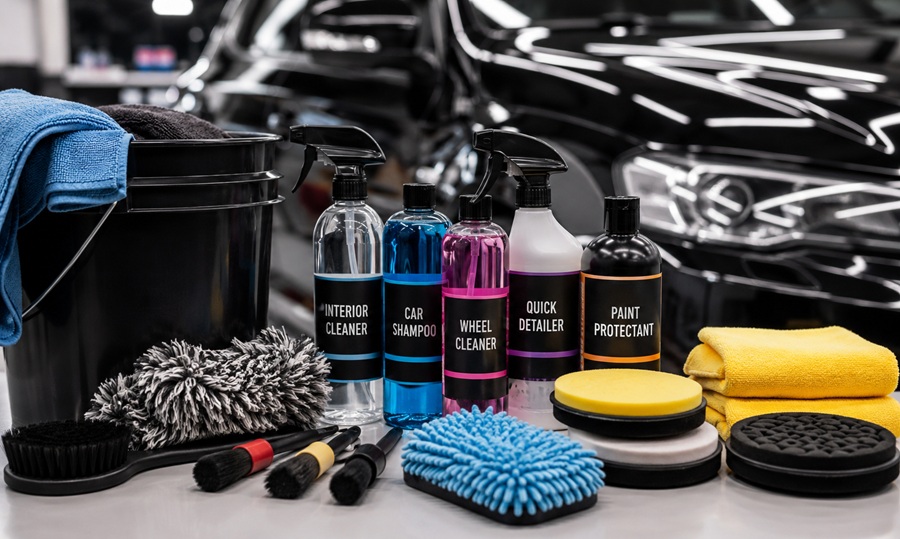
The core car detailing supplies you need are a wash mitt, pH-balanced soap, microfiber towels, a clay bar, wax or sealant, an interior vacuum, and glass cleaner. Beyond those basics, the right tools make the difference between a rushed wipe-down and a finish that looks like it just left the dealership. This guide breaks down what to buy, why each item matters, and how much you should expect to spend depending on whether you’re detailing once a month or running a weekly routine.
What Are the Must-Have Car Detailing Supplies?
Every detailing job, whether it’s a quick Saturday wash or a full weekend project, starts with the same short list of essentials. You need something to wash the paint, something to protect it, something to clean the inside, and something to make the glass and trim look finished.
A good starting kit includes a wash mitt or sponge, two buckets (one for soap, one for rinsing), pH-balanced car shampoo, microfiber drying towels, a clay bar or clay mitt, wax or paint sealant, an all-purpose interior cleaner, and a glass cleaner made for automotive use. Household glass cleaners often contain ammonia, which can damage tinted windows over time, so it pays to buy a car-specific formula.
Once you have these covered, everything else — foam cannons, polishers, ceramic coatings — falls into the ‘upgrade’ category rather than ‘must-have.’ Think of the essentials as the foundation and the extras as tools that speed up the process or push results from good to professional-level.
Many first-time detailers overbuy before they understand their own routine. It’s worth running through two or three full detailing sessions with the basic kit before deciding which upgrades are actually worth the investment for your car and climate.
Exterior Detailing Supplies
Exterior supplies protect the paint from sun, road salt, and daily grime. Start with a two-bucket wash system: one bucket holds soapy water, the other clean rinse water, so you’re not dragging dirt back onto the mitt.
After washing, a clay bar or clay mitt pulls embedded contaminants like tree sap, industrial fallout, and brake dust off the paint surface that soap alone can’t remove. Run your hand over a freshly washed hood — if it feels gritty rather than glass-smooth, that’s a sign clay treatment is overdue.
For protection, you’ll choose between traditional carnauba wax, a synthetic sealant, or a ceramic coating. Wax gives a warm, deep shine and typically lasts four to six weeks. Sealants last two to four months and hold up better against daily driving. Ceramic coatings cost more upfront but can protect paint for a year or longer with proper maintenance washing.
Applicator pads matter more than most people expect. A foam applicator pad spreads wax evenly without streaking, while a separate, clean microfiber buffing towel removes the haze once the product cures. Using the same towel for application and buffing just smears product around instead of leveling it.
A pH-neutral bug and tar remover is worth adding to the kit if you drive on highways often. Scrubbing dried bugs or road tar off with a regular wash mitt can grind grit into the clear coat, so a dedicated remover that dissolves the residue first protects the finish.
Interior Detailing Supplies
Interior work depends more on the right tools than expensive products. A shop vacuum with a narrow crevice attachment gets into seat tracks and console gaps that a standard vacuum misses.
Detailing brushes in a few sizes — a soft-bristle brush for vents and a stiffer one for floor mats — loosen dust and debris before vacuuming. For upholstery, use a cleaner matched to your seat material: fabric cleaners for cloth seats, dedicated leather cleaner and conditioner for leather, and a plastic-safe protectant for dashboards and door panels that won’t leave a greasy residue.
Microfiber towels do double duty here. Keep a separate set for interior use so you’re not transferring wax or polish residue onto glass or trim.
For carpets and floor mats, a spray extractor or a simple spray-and-blot method with an upholstery cleaner handles most stains without soaking the padding underneath, which can lead to lingering odors if it doesn’t dry fully. A small detailing brush with soft nylon bristles is also useful for scrubbing carpet fibers before extraction.
Tools for Wheels and Tires
Wheels collect brake dust, which is mildly corrosive and can etch into clear-coated rims if left too long. A dedicated wheel cleaner, a wheel brush with a long handle for reaching behind spokes, and a separate wash mitt for tires (never the same one you use on paint) round out this category.
Tire dressing or shine adds a finished look, but water-based formulas tend to last longer and attract less dust than the greasy silicone-based sprays sold at gas stations.
For wheels with a lot of caked-on brake dust, an iron remover spray can help. These products react with embedded iron particles and turn purple as they dissolve, giving a visual cue for when the wheel is actually clean rather than just rinsed.
How to Choose Quality Detailing Products
Price isn’t always a reliable signal of quality, but ingredient lists usually are. For microfiber towels, look for a GSM (grams per square meter) rating above 300 — thinner towels tend to scratch rather than buff. For soap, avoid anything labeled as dish soap or an all-purpose cleaner, since those strip protective coatings and dry out rubber seals.
Buying a pre-assembled detailing kit is a reasonable shortcut for beginners, but check what’s actually included. Some kits pad the box with a single-use sample of wax and a thin sponge that won’t last more than a few washes.
Common Mistakes When Buying Detailing Supplies
The most common mistake is buying one towel or mitt for every job. Cross-contamination — using an interior cloth on the exterior, or a wheel mitt on the paint — is how fine scratches, called swirl marks, end up in the clear coat.
Another frequent error is skipping the clay bar step entirely and going straight to wax. Waxing over contaminated paint traps grit under the protective layer instead of sealing a clean surface, which can dull the finish rather than enhance it.
Budget vs Professional-Grade Kits: What You’ll Actually Spend
A basic starter kit covering wash, dry, and wax typically runs $40 to $70. Adding clay bar treatment, wheel-specific cleaners, and interior products brings a mid-range kit to $100 to $180. Professional-grade setups with a dual-action polisher, ceramic coating, and premium microfiber towels can run $250 and up, but many of those tools last for years.
For most owners detailing at home a few times a season, a mid-range kit offers the best balance of cost and results without the learning curve that comes with machine polishing.
Frequently Asked Questions
How often should I replace my detailing supplies?
Microfiber towels last one to two years with proper washing (no fabric softener, no high heat drying). Wash mitts and clay bars should be replaced once they feel stiff or show visible wear, usually every six to twelve months for regular use.
Can I use dish soap to wash my car?
It’s best to avoid it. Dish soap is formulated to strip grease, which also strips wax and sealant off your paint, leaving it less protected. A pH-balanced car shampoo cleans effectively without removing your protective layer.
Do I need a clay bar if I wash my car regularly?
Yes, in most cases. Regular washing removes surface dirt, but it doesn’t remove bonded contaminants like tree sap or industrial fallout that sit on top of the clear coat. Most cars benefit from clay treatment two to four times a year.
What’s the difference between wax and ceramic coating?
Wax is easier to apply and gives a warm shine but needs reapplication every four to six weeks. Ceramic coating is more durable, lasting a year or more, but requires careful surface prep and a longer cure time before the first wash.