A transmission rebuild runs $1,800 to $3,500. A fluid change runs $80 to $250. That gap is the entire reason this maintenance item deserves more attention than it usually gets. Owners tend to treat transmission fluid like something that just quietly lasts forever, right up until a slipping gear or a “check transmission” light shows up on a dash that was fine yesterday. The truth sits somewhere between “never needs it” and “change it like oil” — and it depends heavily on the kind of transmission under the hood and how the vehicle is actually driven.
Why Transmission Fluid Breaks Down
Transmission fluid does three jobs at once: lubricating gears, transferring hydraulic pressure to shift gears, and cooling internal components. Heat is the main enemy here.
- Heat oxidizes the fluid, causing it to thin out and lose lubricating properties
- Friction material from clutch packs sheds into the fluid over time, turning it gritty
- Additives that control friction and prevent foaming deplete gradually with mileage
- Contamination from a failing seal or a dirty dipstick tube can accelerate all of the above
| ⚠ Warning
If your transmission fluid smells burnt or looks dark brown/black instead of red or amber, don’t wait for your next scheduled service. Burnt fluid is often a sign that damage has already started internally. |
Recommended Change Intervals by Transmission Type
| Transmission Type | Typical Interval | Notes |
|---|---|---|
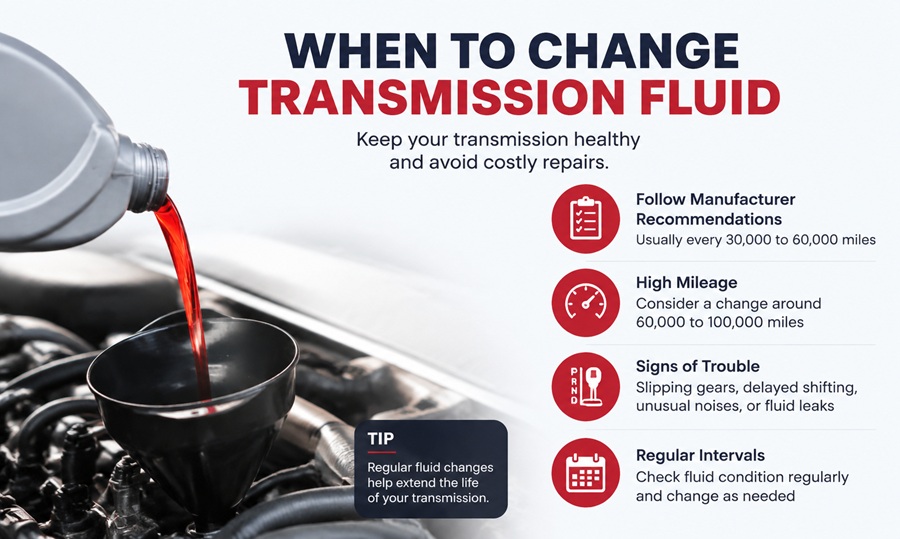
| Standard automatic | 30,000–60,000 mi | Most common recommendation across brands |
| “Lifetime fluid” automatic | 80,000–100,000+ mi | Many mechanics still recommend a change at 60k-80k |
| CVT | 25,000–50,000 mi | Needs specialized fluid — wrong type can cause failure |
| Manual transmission | 30,000–60,000 mi | Often overlooked — no dipstick on many models |
| Heavy towing/commercial | 15,000–25,000 mi | Heat load is dramatically higher |
Signs Your Transmission Fluid Needs Attention
- Delayed engagement when shifting from park to drive
- Slipping or hesitation between gears
- Burnt smell coming from under the hood
- Fluid that’s dark brown, black, or has a gritty texture
- Whining or humming noise that changes with vehicle speed
- Rough or hard shifting, especially when the engine is cold
The “Lifetime Fluid” Debate
Several manufacturers market certain transmissions as filled with fluid for the life of the vehicle. In practice, many independent transmission shops recommend a service around 60,000-100,000 miles anyway, arguing that “lifetime” really means “lifetime of the warranty period,” not the vehicle. This is a genuinely contested point among mechanics, so it’s worth checking your specific manufacturer’s technical service bulletins rather than relying on the marketing language alone.
Manual vs. Automatic — Does It Matter?
Manual transmissions use gear oil, which behaves differently than automatic transmission fluid (ATF). Gear oil doesn’t need to manage hydraulic clutch pressure the way ATF does, so it tends to degrade more slowly under normal driving. However, manual transmission fluid is checked far less often simply because many manual gearboxes don’t have an easy-access dipstick, meaning problems can go unnoticed longer.
Driving Conditions That Shorten the Interval
- Frequent towing or hauling heavy loads
- Stop-and-go city traffic in hot climates
- Mountain or hilly driving with constant gear changes
- Extended idling in traffic with the AC running
- Off-road or performance driving with hard acceleration
Full Flush vs. Partial Drain
A partial drain-and-fill only replaces the fluid sitting in the pan, leaving fluid in the torque converter and cooler lines untouched — usually 40-50% of total fluid replaced. A full flush uses a machine to cycle all the fluid through, replacing close to 100%. Flushes cost more but leave less old fluid mixed with new, though some transmission specialists caution against flushing very high-mileage transmissions with unknown fluid history, since the sudden fluid change can occasionally reveal or worsen existing wear.
Frequently Asked Questions
Q: Can I just top off transmission fluid instead of changing it?
A: Topping off only helps if the fluid level is low due to a small loss; it does nothing for fluid that’s degraded from age or heat.
Q: What happens if I never change transmission fluid?
A: Eventually the fluid loses its ability to lubricate and transfer pressure properly, leading to slipping, overheating, and in the worst cases, complete transmission failure.
Q: Is it bad to change transmission fluid at very high mileage?
A: It can be, if the transmission is already having issues and has never had the fluid changed — a full flush may dislodge debris that was otherwise stuck in place. A partial drain is usually the safer starting point.
Q: Does a CVT need special fluid?
A: Yes. CVT fluid is chemically different from standard ATF, and using the wrong type can cause belt slippage or premature failure.
Q: How much does a transmission fluid change cost?
A: A partial drain-and-fill typically runs $80-$150, while a full flush runs $150-$250, depending on fluid type and labor rates in your area.
Q: Do electric vehicles need transmission fluid changes?
A: Most EVs use a single-speed gearbox with a small amount of specialized lubricant that’s serviced far less frequently — check your specific manufacturer’s schedule since this varies.
What to Actually Do With This
- Check your owner’s manual for the manufacturer-listed interval, then adjust downward if you tow, idle a lot, or drive in extreme heat
- Watch fluid color and smell between services rather than waiting solely for mileage numbers
- If buying a used car with unknown maintenance history, budget for a transmission service in the first few months of ownership
- When in doubt, ask a transmission specialist (not just a quick-lube shop) to inspect fluid condition before committing to a flush