Brake pads are one of those parts nobody thinks about until the car starts squealing at every stop sign. Once that happens, the questions come fast: is this urgent, how much will it cost, and is the shop quote fair? Below is a breakdown built from current shop labor rates and parts pricing, so you can walk into a service bay knowing what a reasonable number looks like.
What’s Actually Included in the Price
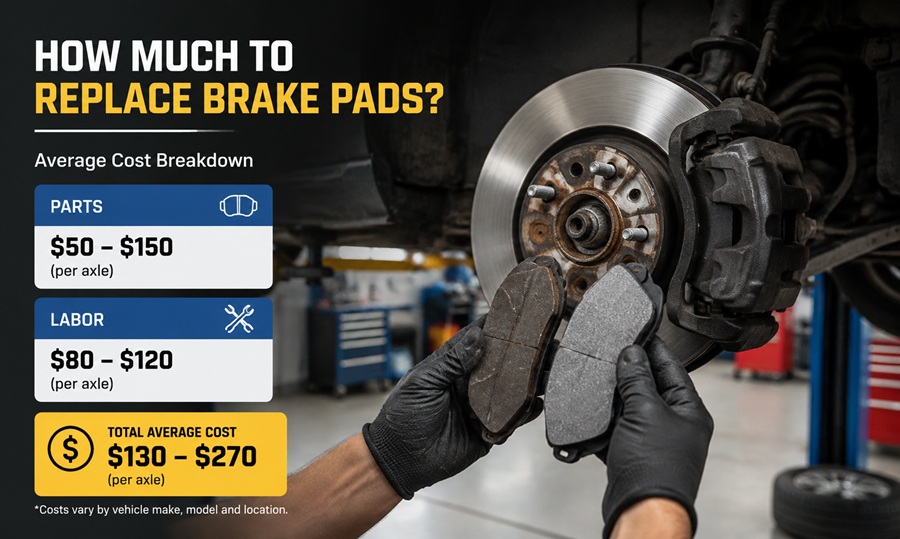
A brake pad “replacement” isn’t just swapping four pads. The final bill usually reflects several line items bundled together:
- The pads themselves (semi-metallic, ceramic, or organic)
- Shop labor, typically 0.5 to 1.5 hours per axle
- Brake fluid top-off or bleed, if needed
- Rotor inspection, and resurfacing or replacement if the rotors are worn thin or grooved
- Hardware kits (clips, shims) on older or higher-mileage vehicles
Most of the price swing between shops comes down to pad material and whether rotors are included, not the labor itself, since labor rates in a given region tend to stay fairly consistent.
Average Cost by Pad Type
| Pad Material | Cost Per Axle | Notes |
|---|---|---|
| Organic/Non-metallic | $80–$150 | Quietest, softest, wears fastest |
| Semi-metallic | $100–$200 | Good everyday balance of stopping power and cost |
| Ceramic | $150–$300 | Longer-lasting, less dust, priciest upfront |
| Performance/Sport | $250–$450 | Built for heat resistance, common on sportier trims |
Cost by Vehicle Type
Vehicle size and brand matter almost as much as pad material. Heavier vehicles need bigger pads and often bigger labor jobs.
- Compact sedans (Corolla, Civic, Elantra): $100–$200 per axle
- Midsize sedans/crossovers (Camry, CR-V, Rav4): $130–$250 per axle
- Full-size SUVs and trucks (Tahoe, F-150, Sequoia): $180–$350 per axle
- Luxury and European vehicles (BMW, Audi, Mercedes): $250–$500+ per axle
Front Brakes vs. Rear Brakes
Front brakes do roughly 60-70% of the stopping work on most vehicles, so they wear out faster and are usually replaced first. Rear pad jobs are often slightly cheaper because the calipers and pad sizes tend to be smaller, though vehicles with rear disc brakes and integrated parking brake mechanisms can actually cost more to service due to added labor steps.
DIY vs. Professional Installation
Doing it yourself
Mainly saves on labor. Expect to spend:
- $35–$80 for a quality pad set
- $10–$20 for basic tools if you don’t already own a C-clamp and jack stands
- 1–2 hours of your own time per axle
Going to a shop
Adds convenience, warranty coverage, and a second set of eyes on your rotors and calipers, which matters if you’re not confident inspecting those parts yourself. Dealerships tend to charge 20-40% more than independent shops for the same job, mostly due to higher hourly labor rates.
Signs You Need New Pads Soon
- A high-pitched squeal when braking (wear indicator tab making contact)
- Grinding or metal-on-metal sound (pads are gone — rotors are now at risk)
- Longer stopping distances or a soft, spongy pedal
- Less than 3mm of visible pad material left
- Vibration or pulsing through the pedal
If you’re hearing grinding, that’s not a “schedule it next month” situation — metal-on-metal contact damages rotors quickly and turns a $150 pad job into a $400 pad-and-rotor job.
How to Avoid Overpaying
- Get quotes from at least two shops before agreeing to rotor replacement
- Ask whether the quote includes hardware kits, since some shops charge these separately
- Choose semi-metallic or ceramic pads for daily drivers rather than the cheapest organic option
- Ask if resurfacing (rather than full rotor replacement) is an option when rotors are only mildly worn
Frequently Asked Questions
How often should brake pads be replaced?
Most pads last between 25,000 and 70,000 miles depending on driving style, pad material, and terrain. City stop-and-go driving wears pads faster than highway miles.
Is it cheaper to replace all four brake pads at once?
Sometimes, since labor overlap and shop diagnostic fees can be shared. But if only one axle shows wear, there’s no mechanical need to replace pads that still have healthy material left.
Do I need new rotors every time I replace pads?
No. Rotors typically last two to three pad replacement cycles if they aren’t warped, deeply grooved, or below minimum thickness specs.
Why do luxury car brake jobs cost so much more?
Larger calipers, specialty pad compounds, and higher parts markups from the manufacturer all push the price up, even though the labor time is similar to a mainstream vehicle.
Can I mix ceramic pads with old rotors?
Yes, as long as the rotors are within spec and not warped. Many shops recommend resurfacing rotors when installing new pads for the smoothest break-in.
Will my car pass inspection with worn brake pads?
In most states, pads below 2mm will fail a safety inspection, so it’s worth checking pad thickness before an inspection appointment rather than after a failed one.
The Bottom Line
Brake pad replacement is one of the more predictable maintenance costs you’ll run into, usually landing between $100 and $300 per axle unless rotors or specialty pads are involved. The real cost-control move isn’t finding the cheapest shop — it’s not waiting until pads are metal-on-metal, since that’s when a routine service turns into a much bigger repair bill.