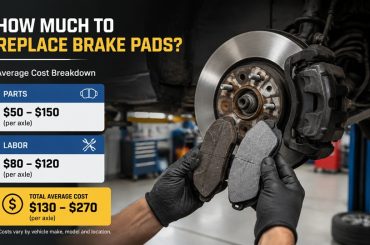
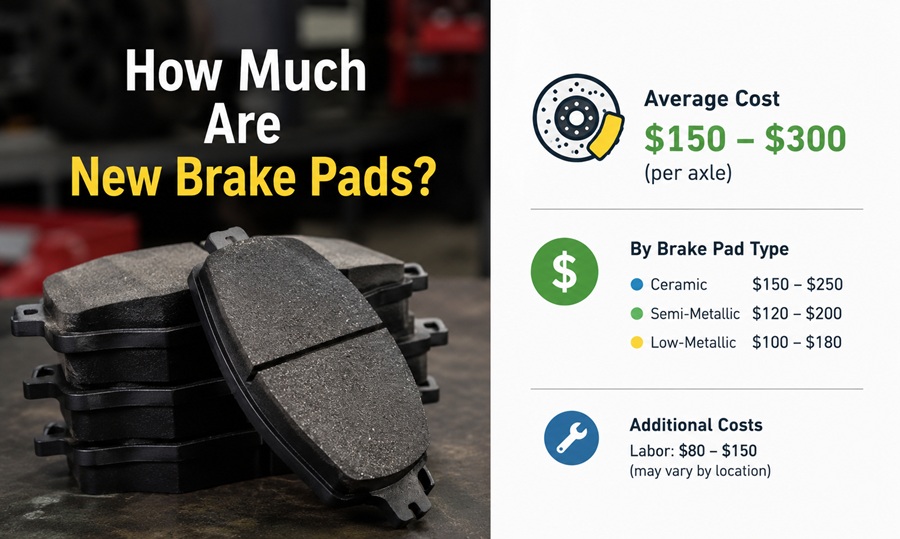
New brake pads typically cost $35 to $150 per axle for parts alone, or $150 to $300 per axle including labor at a shop. Ceramic pads sit at the higher end, semi-metallic pads in the middle, and basic organic pads are the cheapest option. A full brake job that includes rotors usually runs $250 to $500 per axle.
Here’s a full breakdown of what drives that price and how to know if a quote is fair.
Brake Pad Cost Breakdown
| Service | Estimated Cost |
|---|---|
| Brake pads only (parts) | $35 – $150 per axle |
| Brake pads + labor | $150 – $300 per axle |
| Brake pads + rotors + labor | $250 – $500 per axle |
| DIY pads (parts only) | $30 – $100 per axle |
| Premium/performance pads | $100 – $250 per axle |
These numbers shift based on your vehicle, where you live, and the type of pad you choose. A compact sedan will always cost less to service than a full-size truck or luxury SUV, since larger brake systems need bigger, more expensive components.
What Affects Brake Pad Prices?
A few factors consistently move the price up or down, and knowing them helps you spot a reasonable quote versus an inflated one.
Vehicle type. Trucks and SUVs have larger brake systems and pricier parts than compact cars. A brake job on a pickup can run 30-50% more than the same service on a sedan.
Pad material. Ceramic pads cost more upfront but last longer and produce less brake dust. Semi-metallic pads are a middle-ground choice, durable and slightly cheaper. Organic pads are the least expensive but wear out fastest.
Labor rates. Shop labor rates vary by region and shop type. Dealerships typically charge more per hour than independent shops, though independent shops vary widely in quality.
Rotors. If your rotors are worn, grooved, or warped, they’ll need replacing alongside the pads, which roughly doubles the total cost. A mechanic can measure rotor thickness to tell you if this is necessary.
What Is the Difference Between Ceramic and Semi-Metallic Brake Pads?
Ceramic pads are quieter, produce less dust, and last longer, making them a common choice for daily drivers, though they cost more upfront. Semi-metallic pads handle heat better and are often preferred for trucks or heavier vehicles, but they wear rotors faster and generate more dust and noise over time.
How Do You Know If You Need New Brake Pads?
A few warning signs point to worn brake pads before they become a bigger, more expensive problem.
- A high-pitched squeal when braking, caused by a built-in wear indicator
- A grinding noise, which usually means the pads are fully worn and metal is contacting metal
- A soft or spongy brake pedal
- The car pulling to one side when braking
- Visible pad thickness under 1/4 inch when looking through the wheel spokes
If you hear grinding, get it checked immediately. At that point, you’re likely damaging the rotors, which turns a pad-only job into a much more expensive rotor replacement.
Is It Worth Replacing Brake Pads Yourself?
For a mechanically confident DIYer with basic tools, replacing brake pads is one of the more approachable home repairs. Parts alone run $30 to $100 per axle, and the job typically takes 30-60 minutes per axle with the right tools — a jack, jack stands, a C-clamp, and a socket set.
That said, brakes are a safety-critical system. If you’re not fully comfortable with the process, the labor cost of a shop is money well spent. A mistake here isn’t like a squeaky belt — it directly affects your ability to stop the car.
Case Example: Sedan vs. Truck Brake Job
A 2020 Honda Civic getting front semi-metallic pads at an independent shop typically runs around $180 to $220 including labor. The same job on a 2020 Ford F-150, which has larger rotors and calipers, usually costs $280 to $350 for the same service tier. Choosing ceramic pads on either vehicle typically adds $30 to $60 to the total.
This kind of price gap is normal and reflects the size and complexity of the brake system, not necessarily the shop overcharging.
Recommendations Before You Book a Brake Job
- Get two quotes. Prices can vary significantly between shops for the identical service, especially between dealerships and independents.
- Ask if rotors are actually needed. Some shops recommend rotor replacement by default. Ask for the measured rotor thickness compared to the minimum spec.
- Match pad type to how you drive. Ceramic for quiet daily driving, semi-metallic for towing or heavier loads.
- Check for included services. Many shops include a brake fluid flush or caliper inspection with a pad replacement — confirm what’s in the quote.
- Don’t wait for grinding. Squealing is a warning; grinding means you’ve likely already damaged the rotors, which costs more to fix.
Frequently Asked Questions
How often should brake pads be replaced?
Most brake pads last between 30,000 and 70,000 miles, depending on driving style, pad material, and whether you drive mostly city or highway miles. Stop-and-go city driving wears pads faster than steady highway driving.
Are ceramic brake pads worth the extra cost?
For most daily drivers, yes. Ceramic pads last longer, produce less dust, and run quieter, which often offsets the higher upfront price over the life of the pad.
Can you replace just one brake pad?
No. Brake pads should always be replaced in pairs on the same axle to keep braking balanced and even on both sides of the vehicle.